Deepen Your Therapy Practice With Historical Truths…
So You Can Nurture The Healing Your Clients Need.
Enrollment is now open.
“When it comes to healing for Hindus, we have centuries of unaddressed traumas. Studying that erased history is the game changer needed to transform our communities.”
— Zarna Joshi, creator of Hindu Colonial Trauma course
You wish to provide inclusive non-racist therapy for the long underserved community of Hindus…but how will you achieve that goal if you are unaware of the history that has led to our mental health challenges?
01
What if you could study centuries of Hindu history in just 8 weeks — in alignment with your inclusive values for healing and wellness?
02
What if you could stop playing wack-a-mole with the mental health issues your Hindu clients face by getting to the roots of their trauma — finally reaching their most authentic, confident, and truthful path forward?
03
What if you could build a legacy of generational healing in Hindu families while positively impacting other Indigenous and non-white communities — leading to healing, growth, and understanding between colonized communities and colonizers?
Does this sound like you?
You wish to help your Hindu clients address their family traumas, personal anxieties, and depression, leading to better health outcomes and a more stable Hindu community.
You dream of a world where generational trauma is understood, and you can motivate your clients to heal, grow, and lovingly raise their next generations in safety.
You’ve devoted yourself to being a therapist…but you realize there’s something missing in your ability to connect with your Hindu clients.
You identify as “South Asian” or use the term to refer to your Hindu clients, while having no clue where that term originated.
You hold yourself to high standards when it comes to serving your clients and community — and you want to run a therapy practice that genuinely helps while avoiding doing harm.
You encourage your clients to heal from the roots of their trauma instead of just band-aid solutions — because you know what real healing looks and feels like and want that to be the norm.
You’ve been looking for ways to better serve Hindus… but keep sensing there’s a missing piece.
The Path to Success
Most people, whether they’re Hindu or not, think that they know something about Hindu history despite never studying it from any actual decolonial Hindu.
That’s because most people, including Hindus, have absorbed imperialist narratives designed to erase our voices.
The truth is that many Hindus will listen to anyone BUT Hindus when it comes to our history. That dismissal and erasure is a symptom of trauma.
The assumption that Hindus “already know” our history because our abusers told us their version creates a barrier — a wall — to knowing our own identities. It’s going to take more than standard therapy techniques to break through that wall.
Your breakthrough can come from learning authentic Hindu history from an actual decolonial Hindu.
Through history we understand who we are, where we come from, and how we got here. We must look at that reality for Hindus, exposing the exact pressure points that still cause Hindus torment today. Only then can we address those pressure points without stigmatizing our own identities…
I invite you to a breakthrough that will spark deeper conversations, honest revelations, and wisdom that can only come from Hindu ancestors.
What is this wisdom?
It’s not about sugarcoating our history.
Or pretending like bad things never happened.
Or assuming that what we’ve been told by colonizers is accurate.
It’s about facing truth — so that we can stop pretending like we’re unaffected by that history today.
It’s about looking at archeological records, historical accounts, numbers, statistics, and many other types of information. Through this, we can begin to understand historical patterns of behavior, toxic relationships, and connections between world events.
This wisdom will deeply impact your therapy work by providing meaningful insight on the underlying issues affecting your Hindu clients — transforming your therapy practice toward success.
Hindu Colonial Trauma course is exactly what you need to unlock genuine healing for your clients and the Hindu community.
Right now, you might be struggling to…
Connect with Hindu youth, adults, elders — because the therapy isn’t for them when the therapist doesn’t know who they are or what they’ve gone through.
Achieve lasting healing — because you don’t know how to help your clients move away from “band-aid” solutions towards real transformation.
Create truly scalable success — because it’s difficult to see your clients’ full humanity if they’re just viewed as a racial stereotype — an exotic diversity checkmark.
Imagine If…
You had guidance on what issues to address with your Hindu clients and when.
You could respond gracefully to every political world-shift impacting your Hindu clients today.
You could attract an increased volume of Hindu clients because they trust that you will see their full humanity.
Transformation
in 8 Weeks

This is your opportunity to attend Hindu Colonial Trauma course, accessing a wealth of insight into the global Hindu community.
In just eight weeks, you’ll experience a total transformation in your approach to your Hindu clients, your role in their healing, and your mission to inspire genuine long-term success in the field of mental health.
No more wondering how to help your Hindu clients because you’ll finally be able to recognize what you do know and what you don’t — that paradigm shift will be huge for your clients.
You’ll be equipped with the wisdom and clarity to identify their specific needs, rising above the noise of racial and ethnic stereotypes to a path of healing that will last generations.
“I wish I could find a therapist who would give me the help I need as a Hindu woman.”
— Zarna Joshi
Introducing:
Hindu Colonial Trauma course


Eight weeks of eye-opening insights into the biggest barriers to Hindu healing.
Strengthen your therapy practice with knowledge of generational trauma.
Dive deep into clear, resounding truths that live in Hindu bodies and minds.
See the results for yourself so you can stop questioning your effectiveness.
Become the best option for Hindu clients because you’re genuinely rooting for their healing.
Each live weekly session is two and a half hours long.
The education includes group discussion and Q&A with myself as your facilitator, Zarna Joshi.
Course attendees also benefit from a private one-hour session with myself during the eight week time span.
*Trigger Warning*

Here’s What You Get Inside Hindu Colonial Trauma course
-
Prepare to be shocked.
What was India's economy like?
How did Hindu civilization educate their children?
Was there racism or colorism in pre-colonial India?
What was India's social structure like?
Did pre-colonial India have slavery like other civilizations?
What did contemporary civilizations think of India?
Did Hindu civilization have any scientific achievements?
Did women or queer and trans people have any rights in Hindu culture?
-
We’ll study a painful and forgotten history.
Who invaded and colonized Hindus?
What did the colonizers want?
Which weapons of war did they use?
What impact did they have?
Are they connected to slavery in India?
What role did racism play in the colonization of India?
What role does white feminism play in Hindu colonial trauma?
What relevance does this colonial history have today?
-
We’ll expose suppressed facts.
What is “caste”?
Who created "caste" and why?
Who profits from "caste"?
Who suffers from "caste"?
What do colonizers / imperialists say about "caste"?
What do decolonizers / anti-imperialists say about "caste"?
Which voices should be centered in a "caste" debate?
Who is advocating for caste laws in the USA?
-
We’ll examine how Hindu minds were infiltrated.
How was majority Hindu India divided and conquered
Where did the idea of an "Aryan race" come from?
Who was hurt by the idea of an "Aryan race"?
Who profited from the idea of an "Aryan race"?
Who has fought against "Aryan race" ideology?
Who is still perpetuating the idea of an "Aryan race"?
Where did dowry come from in India?
Why is there a North / South divide in India?
Who is actually Indigenous in India?
-
We’ll look at whether Hindus were actually free in 1947.
What caused the Partition of India?
Was Gandhi really a saint?
Who did the British hand power to?
Were Hindus actually free?
What decolonial policies did India's government implement?
What does secularism look like in modern India?
What does Independent India’s political spectrum look like?
What are the fault lines in Hindu unity?
-
We’ll study how colonial narratives erase Hindu truths.
Does western culture understand Indigenous connection to Indigenous animals?
What narrative has the west popularized about "cow violence"?
Who are the victims of "cow violence"?
What is the colonial history of Kashmir?
Who are the Indigenous people of Kashmir?
What is the western narrative on Kashmir?
What is a riot?
What causes riots?
How are riots connected to colonial trauma?
-
We’ll examine the Hindu struggle worldwide.
Where are Hindus around the world?
Why are Hindus found in so many areas of the world?
What is the relationship between Hindus and their host countries?
Is it easy or difficult for Hindus to maintain their traditions and identity worldwide?
How many Hindus are refugees?
Does the media highlight the plight of Hindu refugees?
How do westerners showcase Hindu ideas?
Does anyone care what Hindus suffer?
Why so much violence against Hindus?
-
We’ll look at ways to interrupt trauma and inspire healing.
What are the biggest threats to Hindus?
Who are the most marginalized voices?
What does diet have to do with anything?
How can we celebrate Hindu resistance?
What can you do right this minute to help Hindus?
Will money help?
What does decolonization actually mean?
What is an ally?
Q&A is one of the best things about this course. All kinds of valuable information comes out, like this…
Grounded in the Hindu community:
How would your life improve if you knew Hindu history?
Let’s be honest. Learning Hindu history has never been anyone’s priority. That makes it even more difficult to find the education you need because accurate resources are scarce.
Take the opportunity this course provides to help your clients and you because…
You will never view the world in the same way again.
You will open yourself to a whole new community of Indigenous thinkers.
You will notice subtle manipulation tactics from those in power – tactics that you never noticed before despite all your therapist training.
You will not be as easily fooled by imperialist propaganda.
You will understand your Hindu colleagues, clients, friends, and family better than you ever have before, leading to improved relationships with deeper trust.
You will go deeper into your personal healing journey, increasing your sense of identity and grounding.
You might make changes to your self-care practices including your relationship with yoga and ayurveda.
You might educate your children differently.
You might consider different decisions for your practice and business to be more in line with decolonial values. This may translate to more abundance because improved integrity and business ethics attracts ethical and loyal clientele, particularly Hindus.
You might have conversations with your family members that you never considered having before, and ask questions you never before thought to ask.
You might be moved to research your own lineage, connecting with blood ancestors you never knew existed.
You might connect with nature differently.
You might let go of toxic relationships that enforce colonial ideas.
You might develop the courage to speak up for Hindus.
What kind of future do you want to create?
A future where people ignore the truth in favor of quick fixes and surface “wellness”?
Or a future where people courageously work to heal generational trauma, interrupting cycles of harm?
Hindu suffering has long been ignored and erased. It’s time to ask the question “why?” Hindus are craving to be seen.
Now more than ever, the mental health community needs this information.
This course is for therapists who understand that need and respond to it with curiosity, honesty, and action.
The good news is that you don’t have to be a fully fledged psychologist, therapist, or counselor with a thriving practice to take this course. Students, interns, pre-licensed professionals, and those looking to join the mental health community are welcome. Be ahead of the curve when it comes to decolonial healing and anti-racist education.
Picture yourself going into the future…
Responding to Hindu needs with deeper compassion and insight.
Understanding better how to avoid harming.
Serving clients who are receptive to you and excited to work with you.
Challenging your clients to go deeper…inspiring them to invest in their own healing.
Being able to reach a greater number of Hindus because your clients recommend you as a genuinely safe space.
Knowing that the direction of your practice is correct — not just for now, but for the long haul.
Naturally expanding your services in alignment with your healing mission and personal values.
Going from short-term success to long-term sustainable healing.

If you want real Hindu healing…
If you feel ready for an education that will challenge your assumptions…
And if you can courageously face difficult truths about your own identity…
Then you’ll understand the importance of the choice in front of you…
Are you ready to embrace this powerful opportunity?
Feedback from Hindu community members.
Feedback from non-Hindu community members.
Inside the 8-week Hindu Colonial Trauma course, you’ll gain:
Foundation
Extensive knowledge on the foundations of Hindu colonial trauma.
Perspective
Indigenous perspectives spanning centuries of global Hindu experience.
Safety
Emotional safeguards to put in place immediately for your clients and yourself.

You will learn how to:
Increase your capacity to face the realities your clients face every day.
Develop your own knowledge and skills.
Use therapy techniques alongside decolonial wisdom to propel your clients into their personalized healing journey.
Safeguard the integrity of your practice by avoiding common pitfalls.
Recognize what therapy techniques to not use to protect your Hindu clients from further traumatization.
Be an example of true inclusion to erased members of the largest Indigenous civilization left on the planet.

Photo credit: পাপৰি বৰা
“I’m grateful for your work creating a point of entry and resources to learn more.”
Hindu Colonial Trauma course is unlike DEI courses or anti-oppression trainings. Here’s why…
Most DEI trainings provide pieces of a western-centric and white-centric puzzle.
Hindu Colonial Trauma course provides a holistic worldwide context spanning millennias with evidence almost never revealed by western media or academia. It is led by global south perspectives who are normally silenced in the global north.
No other training brings together such a holistic consolidation of information — not in the corporate DEI industry, not in the social justice movement, and not in academic departments of social studies / Indigenous studies / gender studies / religious studies / history or more.
Most DEI / anti-oppression trainers talk about the importance of history but they leave out history that is inconvenient for a western-centric narrative. In Hindu Colonial Trauma course, we focus on exactly that history the western-centric narrative ignores. We know that the most critical parts of history are the parts imperialist narratives erase and gaslight.
I — your facilitator Zarna Joshi — have personally committed to a life of continuous decolonial healing. I’ve spent years studying histories that related to my personal family traumas as well as worldwide traumas. I faced many fears and challenges to do that work, and I continue to face those fears and challenges to bring the truth to the public. My commitment to decolonial anti-imperialist values will help you develop your therapy practice, providing the framework needed to help your clients. Together, we can uncover core truths that will lead to successful healing for all.

Photo credit: Vyacheslav Argenberg
“I was deeply moved and affected by this Decolonization course and carry the knowledge and continue to integrate it as I walk my path. I have brought what I’ve learned into my meditation and yoga practice and continue to realize what an intense spiritual growth and devotional process it is to stand up as an advocate for the Hindu tradition, and reclaim a lost, traumatized, colonized identity.”
“Dear Zarna, you have opened my eyes and taught me that there is more to history than the colonial explanations I have received in textbooks and the news. Your historical presentation that weaves from centuries ago to where we are now and the references provided has motivated me to read, research and probe deeper.”
Let's walk this path together
Let's walk this path together
Here are more details to get started:
In every weekly session, you will benefit from group discussion and live Q&A with myself, Zarna Joshi.
-
Learn what Hindu Indigenous civilization looked like before imperialist supremacy destroyed it.
Peak into Hindu scriptures, examine archeological evidence, and delve into economic studies to know India’s indigenous impact on communities around the world.
Learn exactly what it is about Hindu civilization that draws the greed of so many colonizers for so many centuries.
Learn how slavery is not an inevitable result of civilization.
Learn what questions to ask about Hindus and notice what narratives are told instead.
Consider how much has been lost of that civilization and what that loss means for Hindus every day worldwide.
Achieve even deeper insights during our group discussion and Q&A.
Benefit from my lifelong study to understand what could be gained for the whole world by healing Hindu trauma.
Gain access to even more resources to study outside of our sessions to further your education.
Mentally prepare for what you’ll learn in Week 2, developing compassion for Hindus in learning about their darkest traumas.
-
Learn the shocking truth of who first colonized Hindus.
Understand why those colonizers made Hindus their target.
Know the true origins of racism that has led to India’s notorious colorism and worldwide anti-Blackness.
Learn who profited from the systematic looting of Hindu wealth.
Learn what those colonizers did to Hindu children.
Learn the fate of countless Hindu girls and women.
Understand what happened to Hindu temples and universities.
Understand who was on the frontlines of the attacks on Hindu temples.
Know what happened to Hindu libraries filled with ancient knowledge.
Learn what Hindus did to protect themselves.
Learn what words and ideas might trigger Hindu traumas due to their centuries long experience.
Understand how Hindus became commodities in their own land.
Consider why this information is omitted from mainstream discourse.
Consider how the omission of vital information re-traumatizes and gaslights survivors of generational trauma.
-
Courageously face this system of oppression without being fooled by stereotypes or caricatures.
Understand how white colonizers fought each other for control of India but cooperated with each other to control Hindus.
Learn the roots of caste oppression and why it exists.
Learn how caste and race are connected and are not connected.
Learn what decolonizers have to say about caste and Hinduism.
Ask why western school textbooks hardly mention anything about Hinduism except caste while perpetuating caste trauma.
Understand who is controlling the narrative around caste.
Know which castes are considered marginalized and which are not considered marginalized and why.
Learn who marginalizes which caste.
Learn what questions to ask about caste.
Learn how to respond to and interrupt emotional and mental blocks in healing by tackling systemic caste oppression.
Understand the many different issues that connect to create this issue.
Understand which voices to support to dismantle caste oppression.
Learn how to address global caste oppression to create a new paradigm of healing.
Set a higher standard for yourself when it comes to sensitively responding to the nuances of your clients’ trauma.
Help your clients heal enough to liberate themselves from generations of guilt and shame.
-
Learn how imperialist invented narratives were instilled to control Hindu minds. Understand how those manipulations have played a major role in global race relations including leading to world wars, regional conflicts, and domestic race politics.
Understand how gaslighting was a weapon inflicted upon Hindus to disconnect them from their own ancestors.
Learn how imperialist manipulations are supported by academia, media, and politicians to this day.
Learn how and why European countries perpetuate Aryan supremacy in their education systems.
Know how much imperialists looted from India while controlling Hindus with gaslighting and manipulations.
Learn why so many Hindus even today believe the lies they’ve been fed.
Consider why most Hindus don’t even think of themselves as Indigenous.
Understand exactly how Hindus were divided and conquered from their own community.
Understand how Hindu women and girls were systematically looted and raped.
Learn the true numbers of Hindu dead from centuries of invasions and colonization.
Learn where Hindu poverty comes from, how long Hindus have suffered it, and what that meant for all of India.
Know how to recognize psychological warfare happening right now all over the world.
Understand how to address these generational psychological wounds in your Hindu clients so they can move forward in healing.
-
Learn why Partition happened and who instigated it.
Learn the results of Partition.
Ask who the British trusted to take over India at Independence and why.
Learn what the general attitude was towards Hindus by the Indian elite at Independence.
Learn who in India faced genocide from the party in power.
Know what tensions were ready to erupt at any moment and who were the vulnerable targets of those tensions.
Learn how the modern Indian state actually perpetuates colonial violence.
Understand the true state of India’s “secularism”.
Understand how Hindus don’t actually have any control over their own institutions or traditions.
Understand how Hindus are still being punished for being Hindu.
Learn how the modern education system is designed to manipulate Hindu children.
See how colonial divide and conquer narratives are still being used to attack India’s Indigenous culture and values.
Know how the media, both Indian and western, is perpetuating imperialist narratives and why.
Learn what “Left” and “Right” means in India and how the western political spectrum divides Hindus.
-
Learn how Hindu wealth is still being looted by colonizers and imperialists.
Understand how Hindus who resist being looting are demonized by colonial media.
Learn the reason for cow violence.
Know the true victims and perpetrators of cow violence and why the truth is hidden.
Learn the true cost of cow violence and who will continue to pay that cost now and in the future.
Understand how western imperialist media narratives are furthering the aims of organized crime in India.
Understand the Indigenous culture of Kashmir and how that culture has been corrupted by imperialists.
Go beyond media narratives to learn who Indigenous Kashmiris are and what they have endured to continue existing.
Learn how far back colonial and imperialist violence goes in Kashmir.
Learn how Kashmiri women are fetishized and commodified in an imperialist patriarchal system.
Learn what causes riots in India.
Learn who profits from riots and who loses.
Learn how Hindus who resist imperialist violence are targeted in riots.
Know what evidence to look for regarding what caused a riot.
Go beyond media imperialists narratives to understand the root causes of riots that stem from generational trauma.
-
Consider the unspoken condition of Hindus outside of India all over the world.
Learn why Hindus exist outside of India and how long they have been there.
Learn what struggles such Hindus face in a world hostile to their identity.
See how and why there are Hindus in global south countries and what treatment they deal with in those different countries.
Learn how Hindus were transported all over the world as slaves and indentured servants.
Understand what conditions are like for Hindus in the global north.
Consider what it means for Hindus to still exist despite the worldwide violence they continue to suffer.
Understand how being economic refugees is such a huge part of Hindu experience.
Know how Hindus are still being systematically looted worldwide.
Learn the damage global cultural appropriation of Hindu practices does to Hindu minds.
Consider what traumas Indian Hindus hold while being uprooted and displaced yet continuing their practices and culture.
Consider the connection and trauma non-Indian Hindus have to India despite not living there or even being Indian.
See how casually westerners inflict even more colonial trauma on Hindus while continuing to exploit Hindu practices.
-
Learn the single most important thing you can do for your Hindu clients.
Learn lots of things you can do for your Hindu clients.
Understand the holistic approach that needs to be taken to create healing for Hindus.
Understand what support your Hindu clients have been lacking for so long and how to give them that support.
See how to build a community of informed allies for your Hindu clients.
Be the therapist Hindus don’t have to explain their history too.
Be the therapist equipped with resources to offer your Hindu clients for their continued healing.
Learn how to speak the truth about Hindus both to Hindus and to everyone else.
Know how to avoid gaslighting Hindus.
Understand what triggers might come up and how you need to respond to those triggers.
See how to recognize what a system of oppression even is.
Learn how to stop funding and perpetuating anti-Hindu narratives.
Know how to address the anti-Hindu fragility that arises in people with imperialist identities.
Understand the true meaning of the term “South Asian” and what identity labels decolonial Hindus might use.
Ask any questions still unanswered. This will allow you to enrich your understanding and move forward with clarity and confidence in your next steps.
Upcoming dates for Hindu Colonial Trauma course
The course is two and a half hours weekly, running for 8 weeks.
Currently summer courses are running on Tuesday evenings and Thursday evenings.
Autumn courses will run on Monday evenings, Tuesdays evenings, Wednesday evenings, and Thursday evenings.
If you can’t make class at any point, recordings of the week’s education will be available but you will miss out on valuable in-person group discussion and Q&A with me.
Apply to get on my waitlist and I will send you upcoming dates.
PLUS: Resources for further learning
01.
After each week’s class, you will come away with a link to more resources on that topic. These resource include books, articles, videos, presentations, studies, documentaries, and more.
02.
Every attendee of this course gains entry to a support group. There is a group for Hindus and for non-Hindu allies, so all can continue the journey of Hindu healing. Support group members exchange ideas and advice, vent about frustrations, and cheer on each others’ victories. These groups meet monthly.
03.
Gain access to supplementary videos for advanced learning in Hindu Colonial Trauma.
Total course investment: $10,000
(Options for payment depending on income.)
Apply now to see if you qualify.

Can you justify the cost and time investment in Hindu Colonial Trauma course?
The short answer: Yes.
The long answer: Yes, of course.
There is nothing being offered elsewhere — I repeat, nothing — that comes close to this course in terms of breadth, depth, and comprehensive healing.
There are many brilliant decolonial Hindu minds who educate on specific topics. I will encourage you to learn from their expertise in their niche fields.
What my course does, however, is pull information from different niche fields and connect the dots between them. This means we can finally start to understand what those different pieces mean for Hindu colonial trauma and what we can do to address problems.
If you skip my course and go to each niche educator individually, you might come out understanding that topic somewhat well but you won’t understand how that niche fits into all the other issues Hindus face.
Here’s an example:
Let’s say you do a class in the Kama Sutra to learn about the Hindu understanding of sex. The class shows you Hindu sculptures, Hindu poetry, Hindu relationships, and different regional Hindu practices. You will come out of that class enlightened about Hindu philosophy regarding sexual interaction and how that connects to the Hindu understanding of nature and romantic love. You will not, however, understand that the Kama Sutra is about more than sex and that sex is just one chapter of that scripture. Nor will you fully understand how the Kama Sutra connects to Hindu gender relations, Hindu queer and trans identities, Hindu sex workers, Hindu enslavement, Hindu child abuse, or the current demonization of Hinduism as “conservative” and “patriarchal”.
If, however, you do my course first, you will be able to delve into any niche topic, including the Kama Sutra, and understand it more holistically.
But what about price?
On average, learning from niche Hindu educators might cost you between $200 - $1,500 per class.
In order to understand the length and breadth of Hindu issues, you’ll need to take many classes, adding up to at least $10,730 if not more.
That’s assuming you know which classes to choose and how they will help your Hindu clients. Without understanding those details, you may bounce from class to class, looking for information and not really knowing what you’re looking for. That could end up costing you upwards of $26,565.
You might decide that you need academic credentials to feel properly educated on this issue.
An MA in Indigenous studies ranges from $21,446 per year to $56,562 per year for tuition at US academic institutions. That would total between $42,892 to $113,124 for your MA.
If you go that route, despite having an masters in Indigenous studies, you still wouldn’t learn a word about Hindus. This is because western academia, even the Indigenous Studies departments, erase the Hindu experience. So you would end up traumatizing your Hindu clients with imperialist talking points designed to silence them.
How about an MA in Religious Studies? Hinduism is a religion so surely that would educate about Hindus?
An MA in Religious Studies is a bit better with regards to cost, with tuition prices ranging from $7,510 per year to $32,980 per year at US academic institutions. That would total between $15,020 to $65,960 for your MA.
Unfortunately, your masters degree would be skewed in favor of western religions while denigrating eastern religions, especially Hinduism. Even in India, modern academic institutions were created to destroy the Hindu faith and promote Abrahamic religions. You wouldn’t even know how you were being manipulated because you’re not educated in Hindu colonial trauma so you wouldn’t know what pitfalls to look out for.
That means you’d end up with impressive academic credentials and even more ignorance about Hindu colonial trauma. You would be the therapist of every Hindu’s nightmares. They might never come back if they see the Masters in Religious Studies certificate on your wall.
Well, what about DEI trainings? Indigenous Hindus are brown-skinned so surely racial justice training would help in some way?
DEI trainings range from $500 - $30,000, depending on how tailored the training is to your needs. If you were to retain a DEI consultant it could cost between $2,000 - $20,000 a month. A highly customized single DEI training could range from $8,000 - $50,000.
As we have previously mentioned, there are no DEI trainings that will inform you about Hindu issues because the trainers themselves don’t understand Hindu colonial trauma.
Even worse, most DEI trainers are just as brainwashed in anti-Hindu imperialist narratives as the media and academia.
The ugly truth is that many Hindus don’t feel welcome in DEI training because of anti-Hindu narratives that are openly spread in such spaces.
DEI trainings mean you will end up educated enough to be highly dangerous to a Hindu person’s mental health.
You might decide to fund your own research to understand what your Hindu clients’ needs are, and to put out the results in published journals and literature.
Quantitative research such as surveys cost between $25,000 to $80,000.
Qualitative research such as focus groups cost between $10,000 to $40,000.
The findings might be worth the cost, assuming that scientific methodologies are utilized that don’t skew the results in favor of anti-Hindu narratives.
But there’s no guarantee of a rigorous scientific methodology in a world where the power structure demands that results match the imperialist narrative. If those conducting the research aren’t educated in Hindu colonial trauma, they will fall into exactly the same traps.
Until now I’ve spoken about cost in terms of money.
But what about the time cost?
Individual classes from Hindu experts might take several hours a week for several weeks or months, depending on the niche subject.
That means that learning multiple niche subjects could take you years to complete, while still not providing a holistic overview of the Hindu experience.
Masters degrees take at least 2 years or longer, depending on what subject and if you’re studying full-time or part-time.
Quantitative research usually involves a large sample size to establish patterns, test hypotheses, and make predictions.
This can be done relatively quickly such as in a survey but that might provide limited data, limit response options, and include response bias. For example, do the Hindu respondents feel safe to answer the question honestly? Is the survey worker visibly Hindu? Where is the survey being conducted?
Quantitative research can also be done with experiments in a controlled lab. This takes longer than surveys and allows for high level of control over variables but may also skew results. Hindus might not feel safe in such an environment. Especially when history and present day reality is full of innocent Hindus being maliciously tested upon by western “science”.
Observation is another way to do quantitative research, observing and recording behaviors as they naturally occur. This can be time consuming especially if behaviors are complex and infrequent, such as trauma responses from complex historical triggers.
This means you might go years without enough data to fully judge what your Hindu clients need to help them heal. It also smells distressingly of anthropology, which is well known to have a racist imperialist history.
Qualitative research is just as bad when it comes to the possibility of exploitation. To be done well, each step is more time consuming than most people realize.
Participants and qualitative researchers need time to build rapport especially when discussing sensitive subjects. It’s important to understand that every subject regarding Hindus is sensitive — and only knowing Hindu history will help you understand that.
Researchers then need time to transcribe and analyze the data. Rushing the process to cut down on time often leads to poor conclusions and ill-thought out analyses.
That means that much qualitative research conducted in 10 weeks or 2 months or 6 months or 1 year, depending on the topic and methodology, is actually rushed data that can’t be trusted. It was about using participants instead of learning how to help them.
Note that these price quotations and time costs are actual costs given by Hindu education websites, academic websites, and well known DEI websites.
To recap:
Hindu educators: $10,730 - $26,565+ in 5-6 years.
Indigenous Studies academia: $42,892 - $113,124 in 2-4 years.
Religious Studies academia: $15,020 - $65,960 in 2-4 years.
DEI: $30,000 - $50,000 in a few days to several weeks to several months. Price and time cost is even higher if you retain a consultant for months.
Quantitative research: $25,000 - $80,000 with time varying from several days to weeks to months to years.
Qualitative research: $10,000 - $40,000 with time never being enough and results being usually skewed as a result.
That’s a lot of money and time to not get what you need.
Your success in accessing the right information in reasonable time and for reasonable cost is important for Hindu healing.
Hindu healing is essential for Indigenous rights and the worldwide decolonial movement.
Hindu healing is essential for racial justice.
Your own desire to be a therapist is wrapped up in healing and community:
You want to make a difference.
You want to help a community that is not being helped.
You want to thrive and you want Hindus to thrive.
So it’s important that you get what you need when it comes to learning Hindu colonial trauma.
That’s why I charge a flat fee of $10,000.
That fee includes:
20 hours of live in-group sessions over 8 weeks.
Viewing my Hindu Colonial Trauma documentary series
Supplementary videos each week to deepen the knowledge
In group discussion and breakouts
Live Q&A with me
1 private hour with me during the 8 week course period
Access to extra resources for additional study
Ability to reach out with questions and comments
Access to a monthly support group facilitated by me
Impact of Hindu Colonial Trauma course:
Read these true stories to see the power of this course.
-
This Hindu community member is in the arts community. We’ll call this person “Deepak”.
Deepak was born into a Hindu family that moved to a global north country due to British colonial trauma. There he was bullied relentlessly for being dark-skinned and Hindu.
Meanwhile, his mother died while he was still a child. Deepak suffered the consequences of losing both his mother and her side of the family, all while getting into fights in school.
Growing up, Deepak rejected his Hindu identity because it carried immense pain. He had also been swayed by negative portrayals of Hindus in western media. He didn’t want to identify with being evil like in “Indiana Jones and Temple of Doom”. It was only years later when he reconnected with a family elder that he began to see Hindu identity as something not negative. But… that family elder also died and he was left alone once more.
Looking for some way to understand his own trauma, he connected with me and began learning about Hinduism and our history.
He finally understood why he’d had the experiences he had. He saw the historical patterns of trauma, poverty, and displacement. He knew how imperialist narratives about Hindus led to Hindus punishing themselves and each other for existing. He saw he’d been trained to reject his own heritage.
Years later, he has a happy family life with his partner and their young son. He makes art that tells Hindu stories, so that his son and other Hindu children can learn about their heritage and Indigenous values. Deepak doesn’t want any Hindu children to feel isolated or misrepresented, the way he once did.
Many Hindu youth have thanked him for the impact of his art on their lives.
His son loves to learn about their culture and has the benefit of a healthy father who is present, loving, and centered in decolonial values.
-
This non-Hindu Black community member is part of the trans community. We’ll call this person “Lakshmi”.
Lakshmi connected with Hinduism as a teenager staying in an ashram. She was given a Hindu name during that experience that she still uses to this day. She did not know much about Hindu history but as a Black Indigenous person, her experience with racism was deep and traumatic and she empathized with Hindus who had suffered colonialism and racism.
Connecting with the wisdom of Hinduism led Lakshmi to deepen her understanding of her own Indigenous ancestors — both Black and brown — and she was grateful to Hinduism for helping her on that path.
When Lakshmi learned that a Hindu friend was being harmed by non-white friends, she stepped in to mediate the conflict. She was shocked to see intense Hinduphobia in community members who called themselves anti-racist. She was unable to resolve the conflict but helped her Hindu friend by witnessing and affirming their traumatic experience.
She took the first opportunity presented to take this Hindu Colonial Trauma course because she wanted to learn more about why the conflict she mediated occurred. Upon attending, she realized that this course was vital for everyone to take, not just for Hindus or those touched by Hinduism like herself. She realized that so much of the history of racism was explained in this course and that it was education that she as a Black person in the USA had not been able to access before. She became firm in her belief that all Black and brown people needed to know this information.
She tried to talk to community members about this and came up against much resistance to learning. As a Black trans person it was already unsafe for her to speak in any space and speaking up about Hindu trauma made her even more unsafe. She needed support but there were so few people in her community who understood Hindu colonial trauma.
She realized that much of the hostile, phobic, and racist behaviors she’d endured and attributed solely to transmisogynoir were also Hinduphobic. It had never occurred to her before that community members were reacting to her Hindu name but as she went through her memories, she realized that there were distinct anti-Hindu behaviors she hadn’t fully understood before taking this course. So even though she was not an Indigenous Hindu, she was still suffering from Hinduphobia and the harmful narratives spread by an imperialist system about Hindus.
As a decolonial, anti-capitalist, and anti-imperialist Black trans person, she saw that the decolonial Hindu trans community had historically protected trans identities worldwide. She spoke up to her trans friends about how the west needed to uplift decolonial Global South trans voices instead of overpowering those narratives with a western-centric lens. She lost multiple friends and community members in this process, and it was partly why she lost her job at a nonprofit she had co-founded. She refocused her efforts on online education and discourse centered around Hindus and their intersecting struggles with others in the capitalist colonial imperialist expansion affecting the Global South. She did, however, fear that this would end up like her last attempt at outreach and education.
She wanted to find a therapist to support her mental health but struggled to find one who understood her intersections as a Black person, a trans person, an Indigenous person, and as a person deeply connected to Hinduism.
She continues to look for opportunities to share this education with others so that such difficult subjects become easier to talk about and Hindus can have more allies.
-
This non-Hindu mixed East Asian community member is an entrepreneur with experience in the corporate world. We’ll call this person Lin.
Lin wanted to learn about imperialism and was asked multiple times by a Hindu friend to take this course. He ignored those requests and avoided learning about Hindu colonial trauma. He thought that since he wasn’t Hindu, the topic had nothing to do with him and didn’t want to waste his precious time. Only after directly interacting with me for weeks did he finally decide to take the course.
Lin was so stunned by what he learned that he started to research his own ancestry. He was even more stunned to learn that he had Hindu ancestors. He realized that those ancestors were forced to give up their Hindu identity by brutal imperialists. He tried bringing up the topic of Hindus with family members and saw ancestral trauma reflected in their responses. He wondered if his own avoidance of learning about Hindus had also been a symptom of that ancestral trauma.
He researched the river in his family village and saw that it was named after a Hindu goddess. He began to learn about that Hindu goddess so he could reconnect with his ancestors’ decolonial relationship with water. Instead of avoiding learning about Hindus, he started to follow Hindu decolonial voices on social media.
Lin stopped eating beef and realized that he became more emotional when seeing cows. He realized that the emotions bubbling up in his body were stemming from ancestral sacred connection to cows and Mother Earth. He was beginning to connect with his own suppressed emotions, and body, and nature in a way he’d never been able to before.
As someone with Indigenous Hindu co-workers, he began understanding the racist challenges his Hindu co-workers dealt with. These were challenges that he’d previously perceived but had never been able to comprehend. As he was now better informed about Hindu issues, he was able to more appropriately support his Hindu colleagues and thus provide a safer working environment for them.
Lin changed his business practices to reflect his newly formed but deeply felt decolonial values. After taking private consultations with me, he started to work on new and revolutionary business ideas that were designed to help instead of unintentionally harm. As a result, he began to attract clients that were more in line with his values and that created a healthier work environment for him as well as them.
Lin is committed to his path of decolonial and anti-imperialist business values. Through his business, he wishes to support his family while defending Indigenous peoples worldwide including his Hindu ancestors.
-
This non-Hindu white community member is a high school educator. We’ll call her Kate.
As an enthusiastic white ally who wants to genuinely take action, Kate was happy to learn about Hindu colonial trauma and took the course shortly after it was launched to the public.
She was amazed at the evidence presented and looked at world history textbooks used throughout her school district to see if they also shared similar information. It was in these books that she discovered the perpetuation of harmful colonial myths. She realized quickly that pretty much everything her school was teaching children about Hindus and Hinduism was incorrect. She reached out to fellow educators to ask them to learn more about this topic and was surprised by their reluctance to commit to the time and energy required to learn about Hindu colonial trauma. She knew that children were being taught harmful things about Hindus and wanted to interrupt that cycle.
She realized that if she, a white school educator, was dealing with such resistance, the erasure and silencing suffered by Hindus when trying to tell their stories must be immense. Especially when harmful colonizing narratives about Hindus were backed up by official school textbooks.
Kate was also ancestrally Jewish. When she realized how Hindus had sheltered the Jewish community throughout history, she began to research more into her Jewish ancestors. This led to more connection to her ancestral stories. She also saw that the Jewish community was not returning the support to Hindus and it became a matter of personal integrity for her to correct that historical wrong by supporting her Hindu friends and community.
Kate wants more educators and teachers to learn about Hindu colonial trauma so they can do more to protect Hindu children from racism and bigotry in classrooms while teaching all children correct information. She is spreading the word day-by-day and wishes there were more people who were educated enough in this topic to help.
-
This non-Hindu white community member is in the progressive movement. We’ll call this person “John”.
As someone who moved in progressive politics, John wanted to make sure he was helping as many global community members as possible. He particularly wanted to show up as a “white ally” to those suffering from racism and colonization. When a Hindu community member suffered racism and the “ally” tactics John tried couldn’t help them, he realized that he didn’t know much about Hindus. After taking Hindu colonial trauma course, he realized that what he’d previously believed about Hindus was incorrect and that his racial justice analysis was incomplete. Despite all his best intentions, he’d been perpetuating an anti-Hindu narrative in his own head, and that translated to potentially harmful actions, especially in political spaces.
Learning from this course, he started to change his perception of the world, and began asking deeper questions about colonialism and racism. In doing so, he picked up on manipulative narratives coming from people he’d previously trusted. He started to see openly anti-Hindu behaviors that he’d never picked up on before. He learned to better see through biases to get to the root of different conflicts and thus was better able to consider solutions to those conflicts.
He began to see Hinduphobia in all spheres, even if he traveled to a new community in a different part of the country. This course had opened up his perspective to the harm still being committed against Hindus that most westerners never notice.
This led to him wanting other community members to learn what he had learned so that they might stop mistakenly harming Hindus or other Indigenous peoples. He encouraged his own children to learn about Hindu history and sat with them to help them learn, because he knew it would help them make better decisions throughout their lives.
John’s time investment in learning about the Hindu community positively shifted his racial justice analysis and now he’s seeing progressive politics with a decolonial global perspective instead of a western-centric lens. That leads to better solutions politically and a more peaceful society.
If you’re still reading then you know something needs to change…
You want to address problems from their roots, creating more chances for deeper healing.
You want your clients to be able to trust you.
You are earnest about having compassion for your clients’ traumas.
You want to protect Hindu children from re-traumatization.
You want to interrupt your own harmful patterns.
You want to learn about your own history so you can begin to heal yourself.
You want to live with integrity, values, and a global decolonial perspective.
You’re ready to go beyond imperialist narratives towards genuine Indigenous truths.
You want to avoid exploiting the practices of Indigenous people.
You’re itching to know what you don’t know.

If you’ve got big goals to grow your Hindu client base, the time to act is NOW.
In 2023 and 2024 deaths of Hindu youths skyrocketed in the US. This happened alongside increasingly Hinduphobic narratives spread in the media.
The signs were always there. This is from a 2022 Texas A&M University study: “Despite facing similar levels of discrimination as Hispanic and Native American people, there have been fewer studies of discrimination and its effects on South Asian Americans. And most previous studies have focused on adult populations, excluding adolescents who are especially vulnerable to discrimination as they explore and form their identities.”

Of the recent Hindu youth deaths, some were deemed murders, some were deemed suicides, some were deemed as showing “no evidence of foul play” despite evidence of foul play all over the scene.
More and more US based Hindus are realizing that they need professional help to cope with these events that are triggering their deepest traumas.
Hindu children and youth need help.
Hindu students need help.
Hindu workers need help.
Hindu parents need help.
Hindu elders need help.
So what happens if you delay learning…and continue with standard therapy techniques?
You’ll miss the imperialist forces that impact your clients’ lives.
You’ll miss the opportunity to increase therapist-client trust.
You’ll miss out on potential revenue from an increased Hindu client base.
You’ll miss an opportunity to lead in this field, where you could be ahead of the curve in Hindu and decolonial therapy.
But there's one more critical risk:
If you don’t understand the issues Hindus face, you run the risk of harming your own clients.
This can happen at any time. Because you are uninformed, you are essentially a programmed weapon waiting to go off. Your Hindu client never knows when you’ll project imperialist narratives at them that will trigger nightmares. The worst part is that you yourself will not understand what you have done to make your Hindu clients feel unsafe. It’s too dangerous for them to tell you.
This means your Hindu clients will never feel safe around you. They will probably stop coming to therapy if they ever came to therapy at all.
This is even more true because Hindus as a community are one of the least likely to seek mental health help in the USA.
CDC data from 2021 stated that while non-Hispanic white people were most likely to receive mental health treatment at 24.4%, non-Hispanic Black people were next with 15.3%, Hispanic people were next with 12.6% and Asians were at the bottom with 7.7%.

There was no other racial category mentioned, even though most Indigenous Hindus don’t identify as Asian or even as South Asian. So were Indigenous Hindus not surveyed? Or where they included in the survey but forced to take on the “Asian” label, which is a colonial trauma trigger?
Even when there are studies like the Texas A&M study mentioned above and the CDC study mentioned here, Hindus still suffer forced assimilation.
Erased or assimilated, which is the most painful? Hindus need a therapist who’ll help them figure that out.
If you wish to help your Hindu clients, you must learn how not to be an unconsciously programmed weapon against them.
It’s time to live with integrity and compassion, remembering that you can’t help your clients without healing yourself. Learning how to be accountable is a major part of healing.
About your facilitator:
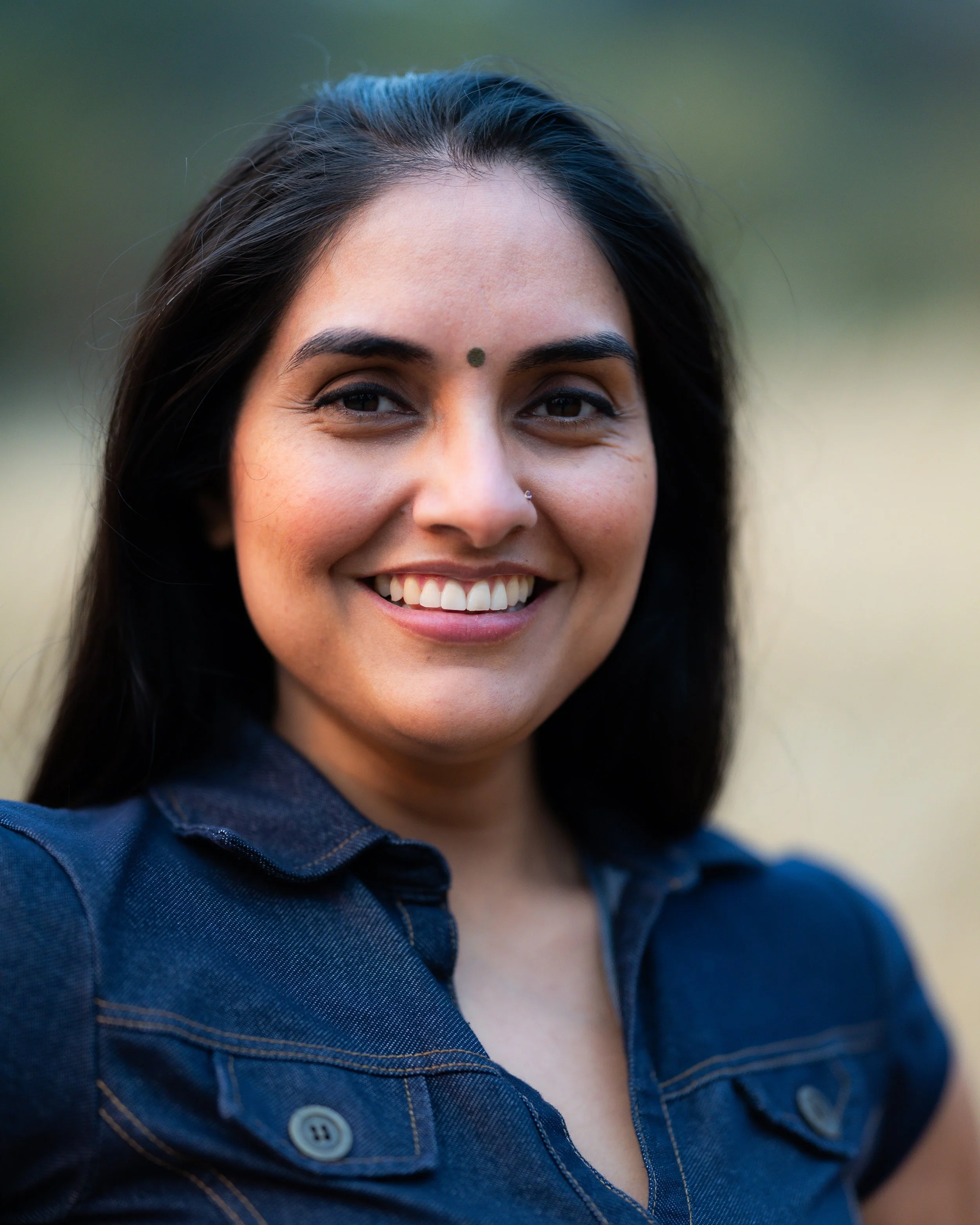
Zarna Joshi
Indigenous Hindu community organizer

I’ve spent years teaching the community about racial justice but it wasn’t until I suffered Hinduphobic attacks from social justice organizers that I realized how vulnerable I was with my own friends.
When I spoke up to protest Hinduphobic behaviors, I was gaslit, demonized, and told I was the problem. The experience was so traumatic I ended up with PTSD and was in therapy for 2 years.
My therapist was compassionate but had no idea what Hindu colonial trauma even was. I had to spend most of my time educating them about Hindu history instead of being given the therapy I needed.
Then the grant I was using to access mental health help ran out. I was left without support after all the effort I’d put into educating my therapist in Hindu colonial trauma.
I tried to find a Hindu therapist as a replacement. At the time (2021), I could find only 2 therapists in Washington state who identified as “Hindu therapists”. I called one and asked if she knew about Hinduphobia. She’d never even heard of the word, even though that word that has been documented in global north media since the late 1800s.
I put the phone down and never called her again. I was too disheartened to try calling the other therapist.
Meanwhile, I worked on developing my Hindu Colonial Trauma course and launched it to the public. Hindus, non Hindus, social justice organizers, political operatives, elders, youth, all demographics took my course. People from different religions, ages, and class backgrounds, were stunned to see the evidence I presented.
I reached out to a famous Hindu psychologist in India to see if he had any recommendations for decolonial Hindu therapists in the US. He said that while he knew of no recommendations in the US, I was welcome to reach out to him if I was in urgent need. I was struck by his generous offer when he was so busy serving millions of marginalized people in India. Meanwhile I, in the richest country in the world, couldn’t find even one therapist to help me.
Multiple community members told me that my course helped them step away from self-destructive and toxic habits.
Others told me my course helped them process childhood traumas.
Others told me it helped them finally understand their parents and resolve conflicts in their families.
Others told me that my course helped them feel less isolated because they knew that I understood their experience.
Hindu parents told me that they were planning on showing the course to their children once they hit 14 (my youngest age limit) so their children had the information needed to fend off anti-Hindu attacks.
Hindu youth told me that just the first class in the course was powerful enough to make them realize how much they needed to know their own history.
Hindu academics told me that my course had managed to do what no one else had ever done before - provide a decolonial holistic overview of the Hindu experience that challenged imperialist narratives with hard facts and solid evidence.
The more I saw how my course transformed community members, the more I realized therapists needed this course. Healing must come from truth and therapy is one way to address truths.
I knew from my elders that in pre-colonial times, Hindus would naturally have access to mental health treatment because every Hindu would have a family guru and Ayurvedic healing. They would be advised on the best remedies and assigned mental health practices. Their guru and Ayurvedic doctor would monitor them to ensure they were progressing in a healthy way. They would be prescribed a certain diet, told which asanas to perform for how long, and when to do what pranayama exercises. They would be told what music to listen to, and what games to play and what mantras to chant. Their guru would help them meditate and teach them how to focus on their spiritual growth.
These days, most Hindus don’t have access to any of that help. I certainly never had access to it. Colonial forces turned my family into displaced refugees twice in one century. I grew up racially bullied. I didn’t know what it was like to belong anywhere until I visited my ancestral temple.
But even in India I found that most Hindus don’t have access to our traditional mental health healing practices. Imperialism destroyed so many of our safeguards. This is why most Hindus don’t even know that therapy is in our traditional healing practices.
I’ve dedicated my life to fighting for justice. I want justice for my own people too. There is no justice without healing.
More feedback from Hindu community members:
Hindu Colonial Trauma course is for you if…
You want to help the Hindu community
You are Hindu
You are not Hindu
You want to be an ally to Hindus
You believe that truth should triumph
You believe in racial justice
You believe in decolonization
You’re an anti-imperialist
You’re questioning narratives
You’re wondering if you’ve unintentionally caused harm
Hindu Colonial Trauma course is not for you if…
You’re not ready to be accountable
You’re not interested in learning about colonial trauma
You’ve never addressed your own fragility
You exploit Hinduism and Hindu practices for money
You use Hinduism for your own benefit but are not interested in helping actual Hindus
You only want to make a living instead of genuinely helping your clients
You’re not ready for difficult truths
You have no interest in global south voices
You’re in denial about the existence of Hinduphobia
You’re held back by your own toxic habits or mental health struggles
Refund Policy and Disclosures
No refunds or guaranteed outcomes are provided for Hindu Colonial Trauma course.
My commitment to you is to show up at the scheduled times and deliver the education and insights that will inform your journey to help your clients.
It is your responsibility to decide whether Hindu Colonial Trauma course is the right fit for you. You must show up, listen, and watch, ask earnest questions and engage in discussion, and make the best effort you can to absorb the information.
No one can decide your actions but you.
This course is for educational purposes only and does not provide clinical training or certification in trauma therapy. It explores historical and cultural perspectives on Hindu colonial trauma to inform therapeutic practice but is not a substitute for medical, psychological, or legal advice. Participants are responsible for ensuring their application of the material aligns with their professional licensure, ethical guidelines, and scope of practice.
The course does not endorse specific therapeutic approaches, and interpretations of trauma may vary. The Educator and course provider are not liable for how participants apply the content in their professional work. Participants should approach the material with cultural humility and exercise professional judgment when integrating course concepts into practice.
FAQs
-
If you do not understand the traumas of your past, you will repeat them in every generation of your family. That is a psychological fact.
If you have a gaping wound that is slowing bleeding you to death, should you ignore it? Ignoring it might help you forget the pain but it will not save your life. Similarly, when we have experienced a trauma, a coping mechanism is to ignore that trauma by pretending it didn’t happen, or pretending we don’t need to think about it because “it was a long time ago”. We might think that coping mechanism is helping but underneath, we’re suffering and not even realizing why. We don’t understand where our health issues are coming from, including our mental health issues. We wonder why we have so many family problems, so many quarrels between partners, cousins, generations. We might struggle to trust others. We might have unhealthy or abusive relationships. We might hover over our children because we’re terrified someone will hurt them. We might hurt our own children. These are possible symptoms of unaddressed traumas.
Not wanting to look at our past is a symptom of colonial trauma.
We cannot move into the future without addressing the past.
Do you want to educate your children in your culture and faith? If yes, then teach them our colonial history. Only then will their attachment to their culture and faith be firm, because they know what their ancestors went through to preserve that culture and faith. To teach them, you need to know the history yourself. That’s why you need this course.
Do you want to resolve family traumas and not repeat them? If yes, then you need this course, to help understand what your family has been through in a way that will heal both past generations and future generations.
Do you think you already know our history? If yes, then I urge you to watch this course. You will be surprised. I thought I was very well informed about our history. Then I researched to create this course and shocked myself with how ignorant I’d been.
Do you want to address the slander and attacks that the Hindu community deals with on a regular basis? If yes, then you need to know how to address that slander and what language to use, so that your valid points are not lost in translation. If you don’t address that slander in an effective way, you will be attacked with it at your workplace, in your social circles, in your children’s school, everywhere. It will happen when you least expect it, when you have no defense.
If you do not understand your own past, you cannot understand your present which means you will not be able to protect your future. This is critical, because it is about the very survival of Hindu existence. Our next generations are converting away from Hinduism precisely because of our traumas. We have to help them remember who they are. Once they lose that connection to their ancestors, it is very difficult to regain.
Do this course. You need it if you are Hindu.
-
It depends. Are you white, or Black, or brown? Mixed? If you identify as any of those racial identities, Hindu Colonial Trauma is irrevocably connected to your struggle.
If you’re white, your ancestors have been part of exploiting and oppressing Hindus for hundreds of years. You have profited from Hindu pain. This is true if you’re white in Western Europe, Eastern Europe, in the Global North, in Africa, in the Middle East, in the Americas, everywhere. You’re still doing it but you’re so used to committing atrocities, you don’t even recognize how your actions are genocidal. That means you’re not aware of what you need to do to stop the relentless violence your people have caused Hindus. You need to learn in order to be accountable.
If you’re not white then the racial oppression you’ve suffered in a white supremacist system is directly connected to Hindu colonial trauma at its root. Your best chance of successfully opposing white supremacy is by allying with Indigenous Hindus. This is not hyperbole, it's a political and economic fact. You’ll only learn how and why this is true when you understand Hindu colonial trauma. You’ll understand your own struggle in a more holistic way by understanding my people’s struggle. This information has been kept from you on purpose by white supremacists. So do you want to win or not?
Anti-Black racism is integrally linked to Hindu Colonial Trauma. Did you know that Hindus in India had ancient friendships and relationships with Indigenous Black African nations throughout history? Hindus and Africans were divided and conquered by imperialists so they couldn’t unite to fight imperialism together. Did you know that millions of Black people are Indigenous Hindus? If you think Black people are only from Africa, that’s anti-Black. Not all Black people are African and not all Africans are Black. Did you know that Hinduphobia is a form of anti-Blackness? Did you know that the European search for India led to many parts of Africa being “discovered” by Europeans and thus colonized by white supremacist colonial powers? Did you know that Hindus and Black Africans were being abducted at the same time and sold into the same slave markets by the same imperialists? Yet India is majority Hindu while most of Africa got colonized into following their colonizer’s religion. What did Hindus do differently that protected their culture, heritage, and diversity? It’s necessary to know in order to understand how to win against white supremacist imperialism.
If you’re Indigenous to the Americas then I’m sure you’ve heard before that Columbus was looking for India. I repeat: Columbus was looking for India. What he wanted to do to India, he did in the Caribbean and Americas. What happened to you also happened to India for a lot longer because Columbus was not the only white man looking for India. Yet somehow, India today is majority Hindu Indigenous while most of the Americas are colonized so thoroughly that Indigenous people only exist in 1% - 5% pockets in the US and Canada, and in larger minority pockets in Central and South America. (The only American country to have a majority Indigenous population is Bolivia with 62% identifying as Indigenous.) What did India do differently to the majority of the Americas? Indigenous populations need to know what will help them in their struggle against ongoing colonialism.
East Asian and Southeast Asian: Did you know that your own ancestors were Hindu? Did you know that they were decimated by Hinduphobic imperialists? By learning about Hindu colonial trauma, you will be able to recognize the ongoing imperialist Hinduphobia that continues to characterize your civilizations and politics. If you want to be free from imperialism, you need this information.
Middle Eastern: Do you know how Islam, Christianity, and Judaism entered India and the history of those religions in India? Do you know about India’s pre-Islamic relationships with countries in the Middle East? It’s important to learn about your region’s relationship with India throughout history in order to understand the benefits of friendship and healing instead of enmity.
Jewish: Are you aware of how Hindus are the only civilization that has never harmed Jews? Are you aware of how Hindus have sheltered Jewish communities from imperialists for centuries? Are you aware of how Jewish people, instead of helping Hindus in return, perpetuate Hinduphobia? Are you interested in being accountable for Jewish Hinduphobia?
Indigenous to Australia, New Zealand, Pacific Islands, and more: Everything I said above about Hindu colonial trauma being connected to other Indigenous struggles is important for you also. Do you want to win against your colonizers or not?
-
a. See above.
b: Are you aware that Hindus are human beings? Are you aware that whether you are Hindu or not, Hindus live amongst you, walk amongst you, try to survive amongst you, and most people don’t even realize there’s a genocide of Hindus happening right now? That should bother you if you care about genocide.
If you say you care about justice and healing, you should care about justice and healing for Hindus also.
If you don’t care about human suffering then that says a lot about you, none of it good.
c. Hindus are Indigenous people, the largest Indigenous civilization still in existence on Planet Earth right now. It is only with Indigenous Hindu leadership in partnership with other Indigenous communities that humans will be able to survive the complete environmental disaster caused by resource extraction, wars including nuclear war, and other devastating results of colonization and imperialism.
The question is, do you want to live? Because if you do then you will need Hindus.
-
You will never view the world in the same way again.
You will open yourself to a whole new community of Indigenous thinkers.
You will notice subtle manipulation tactics from those in power – tactics that you never noticed before.
You will not be as easily fooled by colonial propaganda.
You will understand your Hindu colleagues, clients, friends, and family better than you ever have before, leading to improved relationships with deeper trust.
You will likely make changes to your self-care practices, including your relationship with yoga and ayurveda.
You will likely educate your children differently.
You will go deeper into your healing journey, which will look different to others because it will be personal to you. Deepening your personal healing can increase your sense of self worth and identity.
You might consider different decisions for your business to be more in line with decolonial values. That may translate to more abundance because improved ethics in your business will attract ethical and loyal clientele.
You might have conversations with family members and elders that you never considered having before.
You might be moved to research your own lineage and connect with blood ancestors you never before knew existed.
You might connect with nature differently.
You might learn to let go of toxic relationships that enforce colonial values.
You might develop the courage to speak up for Hindus.
-
Assuming that you’re well informed when you’ve been raised by an imperialist system, educated by an imperialist system, and propagandized by an imperialist system is the height of imperialist brainwashing. Even if you follow “independent media”, guess what? The people running that independent media have still been raised by that same imperialist system, educated by that imperialist system, and propagandized by that imperialist system.
Here’s an example: An independent media journalist goes to a global south country to learn about some war. They want to talk to the people on the ground and find out what is happening. However, due to their deeply ingrained biases – that may even be unconscious biases – they only look for people on the ground who are going to confirm those biases. They’re not looking for contradictory voices. They’re not even looking for honest voices. They just want to be told what they already think about the situation, with some tragedy porn thrown in to give the appropriate flavor of war. The people they latch on to there are usually the people who invited them to that country in the first place. Those people might have agendas that lead to them only showing evidence that confirms imperialist biases. That “evidence” is never authenticated in any legitimate way, or cross-checked with other voices to look for inconsistencies. It’s presented as “the truth”. That twists the story into already ingrained stereotypes dressed up as “groundbreaking reporting” while erasing many vulnerable voices.
Meanwhile, your “critical analysis’ has been skewed by such biases and narratives your whole life. This is true even if you hold marginalized identities in the global north. That is because you have the privilege to not know. You don’t need to look deeper at this issue because you think you’re not suffering from it. The truth is that you are suffering from this issue, you just don’t know how, and your privilege has prevented you from developing the curiosity to find out.
Even if you’re been trained by racial justice trainers in the grassroots, guess what? They’ve also been raised by an imperialist system, educated by an imperialist system, and propagandized by an imperialist system. Their marginalized identities don’t prevent their perception from being skewed just like yours. So now we’ve got individuals, racial justice trainers, and independent media who all think from an imperialist lens. That creates an echo chamber that reinforces imperialist narratives under the guise of “racial justice”. That “racial justice” analysis might be fine when looked at from a western-centric lens, but it is insufficient and incomplete when looked at from a global lens. The worst thing about it is that many people think they are “doing the right thing” by following their skewed outlook. They end up enacting violence on marginalized Indigenous communities in the global south while spouting “justice” talking points.
In order to understand racial justice from a global perspective, you have to listen to decolonial Indigenous voices in the global south. Hindus are the largest Indigenous community in the global south and worldwide, with the most successful historical record of resistance to imperialism and racism. How did they resist? How do they still exist in such large numbers? How do they thrive despite repeated attacks? You don’t know the answers to these questions because your media, your education system, and your racial justice trainers will never tell you. How can they tell you when they themselves don’t know?
You don’t know what you don’t know. Be brave and find out. You will be surprised at how ignorant your “well-informed and educated” mind actually is. You will be shocked at how uncritical your “critical thinking” actually is. That is what global north and western privilege looks like. That is what bigotry looks like. Don’t you want to know how you are perpetuating the problem?
I advise you to find out.
-
I encourage ages 14+.
From age 14 and onwards, this course will benefit all. Teenagers, students, workers, parents, elders, all are welcome 14+.
-
The term “trigger” is psychological terminology. It means when something is said, or happens, that activates a memory of a previous trauma. Activating such traumatic memories within an individual can cause that person to re-experience the feelings they experienced during those real life traumas. It can be very painful and distressing.
Colonial trauma is not an easy subject to discuss. We will delve into many painful histories and those stories may trigger memories and emotions within each of us due to our own experiences. This can happen even in people who are not Hindu.
If we are warned beforehand that this might happen, it helps us navigate such feelings individually should they arise. It also helps us be better able to support each other if triggers occur in others. It can also help us to set up support systems beforehand, such as friends or therapists we can process with outside of class, or we might attend class with a colleague or family member who can be our support buddies during the process.
The presence of trigger warnings indicates the power of this education. This is not about gratuitously shocking or upsetting people, this is about addressing long unaddressed traumas that need to be brought into the light so they can be healed.
Hurt people can hurt people. Healed people can help others heal.
There is no solution to any of our triggers as a society without healing, which is the whole point of doing this course. We must understand what has happened so that we can heal from it.
That is why there are trigger warnings: So that we can engage with difficult healing education in the safest and most supportive way possible.
-
Let’s take a look these “rich minorities”:
US and Canada: Hindus are 5.8% of the population in the US and 2.3% of the population in Canada. Many Hindus of these tiny populations came to these countries as economic refugees. In these countries, they work their way through racial and religious discrimination, school racial and religious bullying, social isolation, low paying jobs, visa and immigration hell, and much more. Hindu Indian citizens are not allowed to directly apply for citizenship in the USA which means they work here, live here, pay taxes, but cannot vote for their own representation in government. Even the Hindu workers in the tech industry, who are arguably making decent salaries, are exploited by the tech industry, paid less than western colleagues, forced to stay in departments that offer no career advancement, and then fired when they are no longer needed. Once they are fired, they get deported because their visa is dependent on their job. Are easily disposable workers considered “rich minorities”? Shouldn’t “rich” imply “power”? Some Hindus, particularly Hindu women, are unemployed because their spouse is a worker in the tech industry and their worker visa does not allow a spouse to work. This means that those Hindu women cannot economically support themselves and are reliant on their husbands for survival. Some Hindu women might be forced through those economic circumstances to stay in marriages that are abusive. Are unemployed abused Hindu women “rich minorities”? What about the Hindus who are undocumented, with no support from any immigration justice organizations because they don’t fall into the identity categories considered “oppressed” by the social justice movement? Are they “rich minorities”? Some Hindus are refugees from literal wars and ethnic cleansing in their home countries. Are refugees from war and ethnic cleansing considered “rich minorities”?
In the UK, Europe, Australia, New Zealand, it is much the same as the USA and Canada. My own family ended up in the UK due to Idi Amin’s ethnic cleansing of Hindus in Uganda. My family were only living in Uganda because they ended up there as refugees from the genocidal British regime in India. I was born in the UK and I’ve lived below the poverty line both in the UK and in the USA almost my entire adult life. Am I a “rich minority”?
In Bhutan, Hindus were ethnically cleansed from the country and ended up as refugees around the world. The BBC declared Bhutan the “happiest” country in the same year. Are Bhutanese Hindus “rich minorities”?
In Vietnam, the Indigenous Cham Hindu minority were and are oppressed by their own government, by other Vietnamese people from other religions, and by communists. Most westerners don’t even know Cham Hindus exist. Are Cham Hindus “rich minorities”?
In Indonesia, Hindus are regularly oppressed by the majority population. The most popular vacation destination of Indonesia is Bali, the last majority Hindu place in what used to be majority Hindu Indigenous Indonesia. Most tourists do nothing to help the minority Hindus except exploit them, culturally appropriate from them, and buy up Bali housing so property prices sky rocket for the native population. Are Indonesian Hindus “rich minorities”?
In Nepal, Hindus were the poor majority in the only declared Hindu country in the entire world. That Hindu national identity was wiped out in 2006 by a communist coup. Being the “majority” did not help Hindus then. Are Nepalese Hindus “rich minorities”?
In Myanmar, Hindus were targeted for slaughter by imperialists, Whole villages were wiped out. That is what led to the Rohingya refugee crisis but the Hindu Rohingya refugees were never mentioned by western media and were refused entry in most countries around the world, including India. They were left to die. Are Rohingya Hindus “rich minorities”?
In India, most Hindus are not rich, nor are Hindus the majority in all of India. In some states Hindus are poor minorities. In the states where Hindus are minorities the country’s central government still considers them to be part of the “majority” population. Those minority Hindus are not entitled to minority benefits despite poverty, abuse, and violent targeting from the majority religions in their state. Are those Indian Hindus “rich minorities”?
Worldwide: Most Hindus in different countries are scattered around the world because they were transported there as slaves or indentured servants by imperialists who profited by exploiting their labor and bodies. Those imperialist rulers were not just the British. India has suffered many imperialist tyrants other than the British. Are these Hindu populations around the world considered descendants of slaves and indentured servants or “rich minorities”?
The imperialist narrative has completely erased how many Hindu slaves built the USA. Were those erased Hindu slaves “rich minorities”?
Take the narrative you have been taught about Hindus being a “rich minority” and throw it in the trash.
-
Who told you that and how can you be sure how much of that is true?
Let’s consider what imperialists have said about other communities. For example, let’s think about the US anti-Black narratives about “gangs” and “thugs” in the 1980s and 1990s. Those media stories were designed to make it seem as if Black people were inherently criminal to cover up how Black communities were being systematically criminalized by an imperialist white supremacist drug war. That drug war led to Black people being disproportionately imprisoned and forced to labor for very little money for corporations, in a system of neo-slavery. This is after the historical transatlantic slave trade in which millions of Black Africans were enslaved and trafficked to the Americas for centuries. Does it seem like the colonizers who originally enslaved Black people might have a vested interest in lying about them in the modern age?
Did you know that the word “thug” was created by British Hinduphobia? It was designed to criminalize innocent Hindus so that the British population wouldn’t feel guilty about how many millions of Hindus they were enslaving and slaughtering. Hindus are the original “thugs”. As I said above, anti-Blackness is integrally linked to Hinduphobia.
Lying about a native or non-white population is a pattern of imperialists to erase their genocidal deeds and gaslight their victims. This is well known and yet so many assume that imperialists somehow aren’t lying about Hindus.
Narratives that demonize Hindus and Hinduism for an ancient entrenched system of caste oppression stem from imperialist regimes that were slaughtering and enslaving Hindus in the millions. Those imperialists’ descendants are spreading the same lies today for the same effect.
Be brave enough to look at the evidence I present about this topic and many other topics. Then consider how you might have been complicit in spreading Hinduphobic narratives. If you are complicit, you need to know the truth to be accountable.
-
The US is majority working class. Are workers in the USA in charge of how the USA is run, or are those workers controlled and looted by a vicious and greedy 1%?
The Global South is the majority population on planet Earth. Does the Global South rule the planet or does the Global North take the majority of the resources, cause the majority of the wars, and destroy the planet’s delicate ecosystems which cause the most disasters for the Global South?
The minority Christian white British government ruled majority brown Hindu India for almost 200 years, causing untold death, slavery, famine, disease, and destruction of national identity and culture. Were the majority brown Hindus able to protect themselves from that or did the white Christian British rule over them with guns?
The narrative about “minorities” and “majorities” is US-centric, Euro-centric, white-centric, and deeply colonial. It does not reflect reality because it is imperialist propaganda. You have to understand how to recognize who the imperialists are in order to understand who has power in any given situation. Just because a community is in the majority does not mean they are in power. Wake up.
-
If you think that a 1.2 billion population of people worldwide, with thousands of years of civilizational culture in India and many other countries, can be summed up by one man in India’s government today, that is deeply racist and Hinduphobic. It says much more about you then about Hindus or Modi.
And yes, even Hindus can be Hinduphobic.
Understanding a nation’s politics today means understanding the context of their politics. Context comes from much more than an imperialist media story you read from the New York Times. It comes from history, from Indigenous narratives, from understanding that community’s colonial trauma.
Perpetuating imperialist bigotry and Hinduphobia with “But what about Modi” is exactly why Global South countries have suffered for so long.